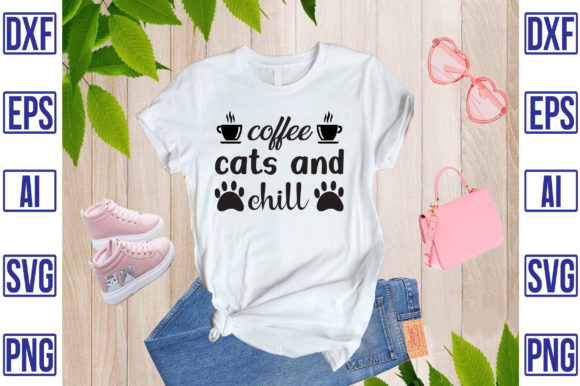
Coffee Cats and Chill
A Designer’s First Glance: Whimsy That Lands Just Right
Opening Coffee Cats and Chill for the first time, I didn’t just see a graphic—I felt its vibe. It’s warm, unhurried, and quietly confident: two relaxed cats curled beside steaming mugs, soft curves, gentle negative space, and a hand-drawn charm that avoids cartoon overload. This isn’t a shout-it-from-the-rooftop design—it’s a quiet smile over morning coffee, the kind you’d stitch onto a linen tea towel or a heavyweight cotton tote for a local café pop-up. As a designer who’s evaluated hundreds of embroidery files for real production, I immediately asked: *Will this hold up under needle and thread—not just on screen?*
Where It Shines: Real Projects, Real Fabric
I tested Coffee Cats and Chill as part of a small-batch embroidered tote bag line for a neighborhood bookstore—cotton canvas, medium weight, slightly textured. The design scaled beautifully at 4.2” wide (hoop size: 5x7”), with clean satin-stitched mug handles and smooth fill-stitch cat silhouettes. No skipped stitches, no thread nesting in the curves. It worked equally well on a lightweight unisex sweatshirt (using tear-away + cut-away stabilizer combo) and on a baby onesie (reduced to 3.5”, with reduced stitch density and ultra-soft poly thread). Customers loved how it read clearly at arm’s length but held detail up close—especially the subtle whisker lines and steam swirls.
It’s also a strong candidate for embroidered patches (heat-seal or sew-on), pillow covers, and holiday gift sets—think “coffee-themed baby shower bundle” with a onesie, burp cloth, and mini blanket. For Etsy sellers, Coffee Cats and Chill fits cleanly into niches like cozy cottagecore, slow-living branding, or indie café merch. As a T-Shirt Designs asset, it leans more toward premium apparel than mass-market tees—its strength is in handmade presentation, not pixel-perfect vector sharpness.
Where to Pause—and Why
This isn’t a one-size-fits-all embroidery file. On stretchy fabrics like jersey or thin tri-blend tees, I recommend testing with light cut-away stabilizer and reducing stitch density by 10–15%—the curved cat outlines can pull if tension isn’t dialed in. Dark fabrics demand careful thread color choices: avoid pale creams or light grays unless you’re adding underlay; go for rich cocoa, charcoal gray, or deep navy instead. And while the design reads well on flat surfaces, avoid placing it directly over seams or high-curve zones like cap crowns without adjusting placement or using a smaller scale.
The tiny steam detail and narrow mug handles are charming—but they’re also where stitching clarity lives or dies. On dense fabrics like fleece or thick terry cloth, those fine elements may blur unless you adjust your machine’s underlay settings or use a finer needle (75/11). Also, don’t assume it’s ready for blackwork-style monochrome embroidery: test it in grayscale mockups first. Some subtleties vanish without tonal contrast.
What It Adds to Your Finished Product
Coffee Cats and Chill elevates perceived value—not through complexity, but through intention. It signals care: the kind of attention that makes a customer pause mid-scroll on Etsy, or choose your handmade pillow over a mass-produced one. It builds trust because it feels human-made, not algorithm-generated. For craft business owners, it supports brand consistency when paired with complementary designs (think matching mugs or printable gift tags). And for personalized gifts? It lands with warmth—not irony. A new parent receiving a baby blanket with this stitched in soft ecru thread doesn’t see “cat + coffee”—they feel seen.
Practical Notes Every Embroiderer Should Check
- Always test on scrap fabric first—especially if using textured, dark, or stretchy materials.
- Review stitch density before scaling up. Dense fills work on canvas but may pucker delicate knits.
- Confirm hoop size compatibility. The SVG, PNG, EPS, AI, DXF, and JPEG files suggest broad software support—but verify your embroidery software imports the format you need.
- Inspect small details at actual stitch size: zoom in on steam lines, mug rims, and paw pads.
- Test thread color contrast on both light and dark fabric swatches—don’t rely on screen previews alone.
- Use proper stabilizer: medium-weight cut-away for knits, tear-away for stable wovens, and fusible + tear-away for lightweight linens.
- Check licensing terms before selling finished items or reselling digital files—this is a digital embroidery file, not a physical product, and commercial use rights must be confirmed directly with the seller.
- Compare light/dark backgrounds in printable mockups—what reads softly on cream may disappear on navy without contrast adjustment.
Final Thought: A Design That Earns Its Place
Coffee Cats and Chill isn’t flashy—but it’s thoughtful. It doesn’t try to do everything, and that’s its strength. As a machine embroidery design, it balances simplicity and personality. As a digital embroidery file, it offers flexibility across formats without sacrificing cohesion. And as a piece of design assets for your craft business, it invites connection—not just decoration. Whether you’re stitching a single personalized gift or building a boutique collection around slow, joyful living, this design earns its spot in your library. Just remember: great embroidery starts with respect for the fabric, the thread, and the person who’ll hold the finished product in their hands. Test it. Tweak it. Then let it breathe—and watch customers smile.