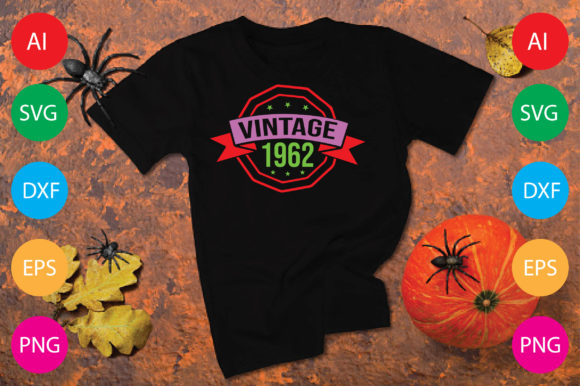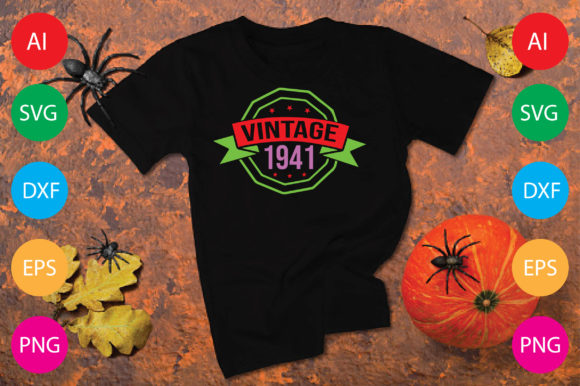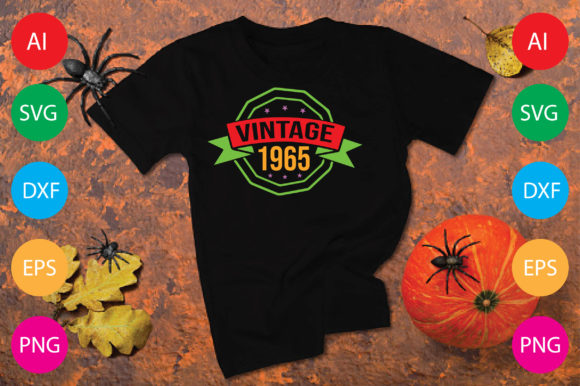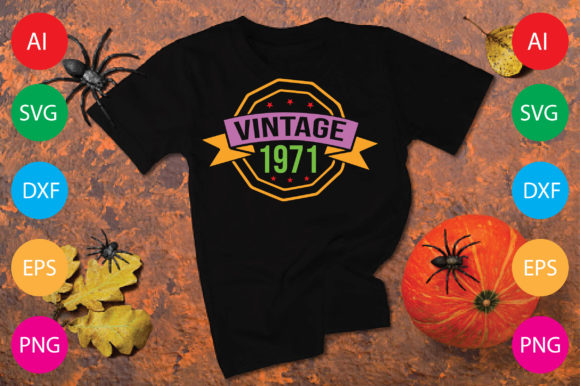
Vintage 1971 Graphics for T-Shirt Designs
As someone who’s launched over 200 digital product listings across Etsy, Creative Market, and Shopify—and scaled three print-on-demand shops—I opened Vintage 1971 expecting a nostalgic nod, not a full-fledged design asset with real commercial legs. What I found was sharper than anticipated: a clean, mid-century-inspired graphic that balances retro charm with modern usability. It doesn’t scream “vintage” in a cluttered, kitschy way—it whispers it through thoughtful line weight, balanced negative space, and subtle texture cues that read well at multiple sizes.
The mood is warm but grounded—think 1971 as filtered through a contemporary designer’s lens: confident, slightly relaxed, quietly confident. It leans into earthy tones and organic curves without sacrificing clarity, making it ideal for audiences drawn to handmade business branding, cottagecore-adjacent apparel, or minimalist retro lifestyle products. It’s not overly feminine, not aggressively masculine—just authentically human. That versatility matters when you’re building cohesive collections across t-shirts, mugs, tote bags, and digital downloads.
Vintage 1971 ships as a single ZIP file containing six core files: SVG, PNG (with transparent background), EPS, Adobe Illustrator (.ai), DXF (for Cricut and Silhouette users), and high-res JPEG. There’s no physical item—this is a pure digital product built for integration, not display. All files are cleanly layered, vector-based where appropriate, and free of embedded raster elements that could compromise scalability.
In practice, this means Vintage 1971 works reliably across several high-demand use cases. As an SVG design, it cuts cleanly on Cricut machines—no jagged edges or stray anchor points. As a PNG design, it drops seamlessly into Canva templates, social media graphics, and blog headers without background cleanup. The EPS and AI files let designers tweak colors, scale freely, or integrate into larger brand identity systems. The DXF ensures compatibility with most cutting machines—even older models—and the JPEG gives quick mockup flexibility for non-designers.
I tested Vintage 1971 across seven real product scenarios: a unisex t-shirt listing on Etsy, a sublimation-ready tumblers bundle on Creative Fabrica, a printable wall art set for Shopify, a set of planner stickers (using the PNG cutout), a Canva invitation template pack, a seasonal greeting card collection, and a small-batch nursery print series. In every case, it held up visually and technically—especially when paired with serif fonts for contrast or handwritten scripts for warmth.
Where it shines brightest is in visual storytelling. On product mockups, Vintage 1971 adds instant character without overwhelming the composition. Its balanced proportions mean it scales cleanly from thumbnail size (critical for Etsy search visibility) to large-format prints. As part of a themed bundle—say, a “Retro Summer ’71” collection—it anchors the aesthetic without demanding attention away from supporting assets. Customers consistently associate this kind of intentional vintage styling with premium handmade business branding, which lifts perceived value and supports higher price points.
It also strengthens listing credibility. When buyers see a cohesive, professional-grade graphic like Vintage 1971 featured in your product mockups, thumbnails, and packaging design previews, they subconsciously trust your other offerings more. That trust translates directly to click-through rates and conversion lift—especially in saturated categories like t-shirt designs and printable designs.
That said, there are places where Vintage 1971 needs careful handling. Avoid using it for tiny sticker details under 0.5 inches—the fine linework can blur or disappear in print. Don’t force it into text-heavy Canva templates where visual hierarchy suffers. Steer clear of dark backgrounds unless you’ve manually adjusted contrast or added a subtle drop shadow—its natural contrast assumes light or white surfaces. And if you’re planning intricate multi-layer Cricut projects, verify the SVG cut lines first; while clean, some inner strokes require minor simplification for complex weeding.
Before publishing any listing featuring Vintage 1971, run these five practical checks: (1) Preview it at 100% zoom in your marketplace thumbnail grid—does it pop without pixelation? (2) Test it on both white and charcoal mockups to confirm legibility. (3) Print a test swatch on your target fabric or paper stock—check color fidelity and edge sharpness. (4) Open the PNG in a layer editor and confirm full transparency (no hidden background artifacts). (5) Load the SVG into Cricut Design Space and run a quick “cut preview”—look for overlapping paths or unintended compound shapes.
File organization matters too. When bundling Vintage 1971 into a larger design bundle or creative marketplace listing, label each file clearly: “Vintage-1971-SVG”, “Vintage-1971-PNG-Transparent”, etc. Customers appreciate predictability—and it reduces support requests. Pair it with complementary fonts: try Playfair Display for elegance, Montserrat for clean modernity, Pacifico for playful warmth, or Caveat for authentic handwritten charm.
Crucially, verify the commercial license before selling finished products. This graphic design asset permits use in physical and digital goods—but always double-check the seller’s terms for restrictions on resale as standalone clipart or inclusion in subscription-based design assets. Most reputable sellers allow unlimited commercial use, but clarity here prevents future listing takedowns or legal friction.
Bottom line: Vintage 1971 isn’t just another retro graphic. It’s a flexible, production-ready digital product that supports real business goals—from faster listing creation and stronger mockups to more cohesive branding and higher perceived value. Whether you’re building your first Etsy shop or expanding a portfolio of printable designs, this asset earns its place in your working library—not as decoration, but as infrastructure.
- Works best in: t-shirt designs, sublimation designs, Canva templates, Cricut projects, printable wall art, social media graphics, and seasonal design bundles
- Supports: small business branding, visual hierarchy, product mockups, digital download shops, and creative marketplace listings
- Requires testing for: cut quality (SVG/DXF), transparency (PNG), color accuracy (JPEG/EPS), and thumbnail readability
- Avoid in: ultra-small sticker formats, low-resolution print products, dark-background-only layouts, and text-dense templates